
 Kensington
Bachelor of Data Science and Decisions

Natural sciences, mathematics and statistics
- Duration
- 40 months
- Intakes
- Feb
- Tuition
- A$56,167/yr
Study in Australia
Compare Australian data science degrees by curriculum, mathematics requirements, programming content, accreditation, tuition fees and study location. Find a course that builds the technical and analytical foundations you need for data-focused study and future careers.
Study Match instantly recommends relevant university, course and program options for your profile.
My nationality is
Covers Gaokao • A-Level • IB • ATAR • SAT • HKDSE • GPA and more
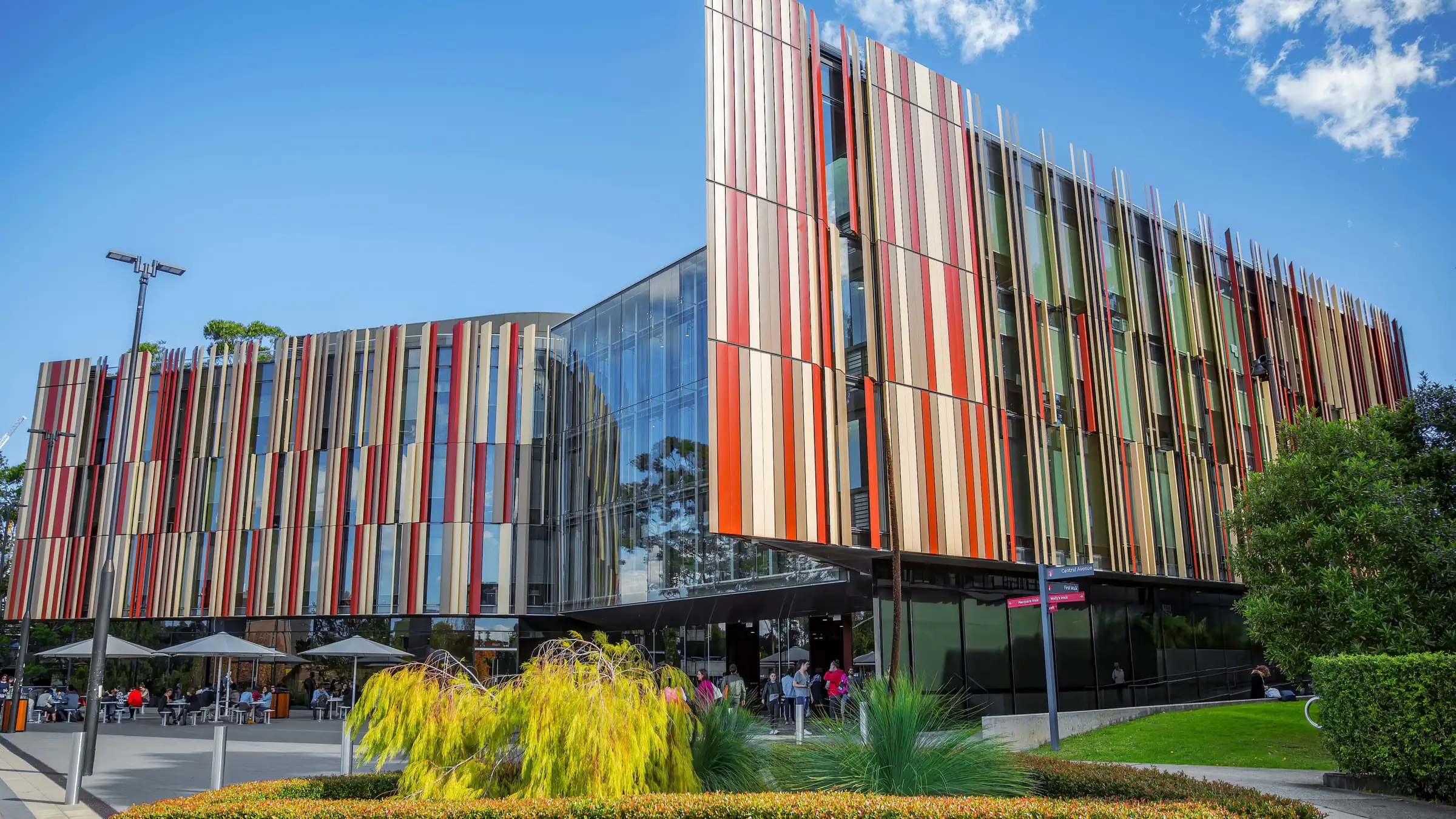
Photo: Macquarie University, CC BY 4.0, via Wikimedia Commons (cropped)
Opportunity Matrix
Compare bachelor-level data science degrees, including honours programs, by university, location, tuition fees, scholarships and intake.
33 courses
KensingtonNatural sciences, mathematics and statistics
 Clayton

Natural sciences, mathematics and statistics
 Adelaide

Information and Communication Technologies (ICTs)
KensingtonNatural sciences, mathematics and statistics
Clayton +1Natural sciences, mathematics and statistics
AdelaideInformation and Communication Technologies (ICTs)
Showing 1–6 of 33 courses
Field Guide
AQF Level 7
A standard Australian Bachelor Degree is generally an AQF Level 7 qualification, designed to develop broad and coherent knowledge for professional work and further learning.
About 3 years
Many Bachelor of Data Science programs are designed around approximately three years of full-time study.
Honours programs, double degrees and combined qualifications may take longer.
Australian data science degrees commonly combine:
The balance between computing, mathematics and business applications can vary significantly between universities.
Data science is generally more mathematically intensive than a standard business or information systems degree.
Depending on the course, students may study or be expected to have prior knowledge in areas such as:
Always check the mathematics prerequisite for the specific university course.
Programming is a core component of most data science programs.
Students may encounter languages and technologies such as Python, R, SQL or other tools used in data analysis and machine learning.
The exact technologies vary by university and may change as industry practice develops.
Some Australian data science programs are accredited by the Australian Computer Society (ACS).
However, accreditation applies to an individual course and accreditation period rather than automatically to every technology course offered by a university.
Study Match
Match courses to your grades, budget and goals.
Expert Context
A strong data science program should normally go beyond dashboards and reporting.
Look for a combination of:
statistics + programming + databases + machine learning + data communication
A course with very limited programming or quantitative study may be preparing students for a different type of analytics role.
These study areas overlap but are not interchangeable.
Data Science generally focuses on extracting knowledge from data through statistics, programming and modelling.
Data Analytics may focus more heavily on interpreting data to support organisational decisions.
Computer Science usually provides broader study of computing, including algorithms, software, systems and theoretical foundations.
The individual subjects are therefore more useful than the degree title alone.
Australia's current occupation framework identifies Data Scientist as a distinct occupation.
The role can involve statistical modelling, programming, databases, machine learning and communicating findings to decision-makers.
For students comparing degrees, this makes technical depth and practical analytical capability particularly relevant.
“AI” and “machine learning” increasingly appear in university marketing.
Look at whether machine learning is:
One introductory machine-learning subject is different from a degree with a substantial modelling pathway.
Capstone projects, industry projects and real-world data assignments can help students connect theory with applied problem-solving.
When comparing programs, check whether students actually work with datasets and end-to-end analytical problems.
Questions, answered
Typical study areas include programming, statistics, mathematics, databases, machine learning, data visualisation and analytical modelling.
Often yes. Mathematics requirements vary by university, but data science generally relies heavily on statistics and quantitative reasoning.
No. They overlap, but Computer Science covers computing more broadly, while Data Science focuses more heavily on data, statistics and modelling.
Many standard programs take approximately three years full-time. Honours and double degrees may take longer.
No. Accreditation applies to individual courses.
Ranking can be useful, but curriculum, mathematics content, programming depth, accreditation, practical projects and your academic eligibility can provide a more useful course-level comparison.
Compare programming, mathematics, machine learning, accreditation, entry requirements and tuition before creating your shortlist.
We value your privacy
We use cookies to understand how the site is used. Analytics only — never advertising. Privacy Policy